Slideshow

1 / 6
THE WEATHER TIME
2 / 6
THUNDERSTORM
3 / 6
WINTER
4 / 6
EARTH
5 / 6
SOLAR SYSTEM
5 / 6
UNIVERSE

KARACHI WEATHER

Saturday, January 2, 2021

There are in excess of 100,000 cavities on the moon

 Both the Earth and the Moon have been hit commonly all through their long 4.5 long term history. When something hits the Moon, that occasion gets frozen as expected. Earth, then again, dismisses these effect pits and proceeds onward with its life. 


That is the explanation there are such countless cavities on the Moon contrasted with Earth! Furthermore, their arrangement and advancement record the historical backdrop of the internal Solar System. 


Visual examination of pictures and DEM information by specialists or programmed recognition has perceived numerous lunar pits, and thus, numerous hole data sets have been set up. Notwithstanding, the subjectivity of manual discovery and the restrictions of programmed location with various kinds of information have brought about huge contradiction in hole numbers among existing data sets. 


Ongoing information came out by Chinese researchers, proposing in excess of 100,000 pits on the Moon. 


Researchers utilized computerized reasoning to prepare a profound neural organization. With data from China's first and second lunar orbiters-Chang'e 1 and Chang'e 2, the organization recognized 109,956 new pits. 


Study creator Chen Yang, of the College of Earth Sciences at Jilin University and the Key Laboratory of Lunar and Deep Space Exploration at the Chinese Academy of Sciences stated, "Effect holes (are) the most analytic highlights of the lunar surface. That is in incredible difference to the outside of the Earth. It is exceptionally hard to follow the Earth's set of experiences of being affected by space rocks and comets in the course of the last 4 billion years." 


"Earth and the Moon have been struck by the equivalent impactor populace after some time, however huge lunar holes have encountered restricted corruption more than billions of years. Along these lines, lunar effect cavities can follow the advancement of the Earth." 


Nonetheless, there is no water, no air, and no structural plate movement on Moon's hole. The age of an enormous pit can likewise be controlled by checking the number of little cavities are found inside it. 


Mohamad Ali-Dib at the Institute for Research on Exoplanets at the University of Montreal stated, "This most recent investigation isn't the first to send AI to distinguish lunar holes. In 2018, a group at the University of Toronto Scarborough utilized information from a laser altimeter to identify cavities. They distinguished around 6,000 already unidentified cavities on the Moon." 


"AI can be utilized to identify pits on the Moon. Cavities are a window into the dynamical history of the nearby planetary group."


Friday, January 1, 2021

Supermassive Black Holes Birthing Stars at "Incensed Rate"!

 We have been progressively hearing substantially more about black holes and their job in the universe. 


Black holes are extraordinary animals, fundamentally ordered in two sorts as per their size: heavenly black holes (up to tenths of sun based masses) and supermassive black holes (billions of sun based masses). We generally used to accept that, free of their size, black holes all offer a similar component: they eat up everything getting excessively close and entering their occasion skyline. 


For quite a long time, stargazers have searched for galaxies bunches containing rich nurseries of stars in their focal worlds. All things considered, they discovered ground-breaking, goliath black holes blasting out energy through planes of high-energy particles. Amazingly hot particles radiating from these black holes were discovered to forestall the arrangement of stars. So where are generally the stars coming from? 


The main speculations have proposed two instrument to explain this secret. One concerns the chance of having less powerful black holes that could permit star development, and the subsequent one concerns the likelihood that the star arrangement occurs by "mishap" in the accumulation plate of the black hole. 


Regarding the subsequent hypothesis, since 2017 a group of astrophysicists have been noticing supermassive black holes and the likelihood that these substances could be birthing stars. By noticing the impact of two galaxies somewhere in the range of 600 million light-years away (each with a supermassive black hole at its middle) through the Very Large Telescope (VLT) in Chile, they discovered proof of new star birth from material being catapulted from the black hole, called a surge. 


A surge of gas could be liable for making new stars by whirling around the focal point of the black holes (consider water going down a channel) in something many refer to as a gradual addition plate. In this district, gases are warmed to amazing temperatures and afterward are quickly launched out into space, so cosmologists accept that a portion of the material may be flung out of the universe out and out. The newfound stars are a lot bigger than our own sun: around multiple times its mass, and up to 40 or 50 sun powered masses. 


"This could change definitely our comprehension of galaxies arrangement advancement." 


– Maiolino on CBC News 


As for the main chance, researchers have convincing proof for a galaxies group where stars are framing at an angry rate, clearly connected to a less compelling black hole in its middle. This has been as of late affirmed with novel perceptions in this special bunch situated about 5.8 billion light a very long time from Earth in the Phoenix Constellation, where the planes from the focal black holes rather have all the earmarks of being helping in the development of stars. The black holes is in the focal point of a galaxies group called the Phoenix Cluster, and the enormous universe facilitating the black holes is encircled by hot gas with temperatures of millions of degrees. The mass of this gas, equal to trillions of suns, is a few times more noteworthy than the consolidated mass of the multitude of galaxies in the bunch. This hot gas loses energy as it gleams in X-beams, which should make it cool until it can frame enormous quantities of stars. 


Presently, the writers of this examination guarantee that, in this specific group, the black hole burst isn't as solid as in any remaining noticed universe bunches, where the explosions of energy driven by a particularly black hole shields a large portion of the hot gas from cooling, forestalling far reaching star birth. 


Proof for quick star development in the Phoenix Cluster was recently revealed in 2012 by a group drove by McDonald. In any case, further perceptions were needed to learn insights regarding the focal black hole's job in the resurrection of stars in the focal universe, and how that may change later on. By joining long perceptions in X-beam, optical, and radio light, the scientists picked up a ten times improvement in the information quality contrasted with past perceptions. The new Chandra information uncovers that hot gas is cooling almost at the rate expected without energy infused by a black hole. The new Hubble information shows that around 10 billion sunlight based masses of cool gas are situated along fibers driving towards the black hole, and youthful stars are framing from this cool gas at a pace of around 500 sun oriented masses for every year. By correlation, stars are shaping in the Milky Way galaxies at a pace of around one sunlight based mass for each year. 


We are seeing an enormous advance forward in our comprehension of the development of


stars, galaxies, and the universe!

Casing Dragging Caught in real life

 An astrophysical framework has recently shown outline hauling unexpectedly. 


The hauling of room time by a turning mass, also called outline hauling, was anticipated by Einstein's overall relativity. Einstein hypothesized that not exclusively does a mass bend spacetime, yet it will likewise drag nearby spacetime into movement around itself as it turns, much like the air in a cyclone. The measure of drag is accordingly straightforwardly corresponding to the turn. 


A couple of years after the fact, in 1918, Austrian physicists Josef Lense and Hans Thirring anticipated that the hauling of spacetime because of a pivoting heavenly body – outline hauling – would compel a close by circling body into precession. That is, the closer you are to the turning body, the more you are pulled around with it – which for another pivoting body powers its hub of revolution to constantly alter course with the changing draw along the circle. This impact is currently known as Lense-Thirring precession. 


At high rates, a whirligig shows unprecedented strength and keeps up the heading of the rapid pivot hub. Precise energy is subsequently moderated as long as there is no outside force. In any case, within the sight of outer powers, the whirligig will encounter precession because of force, where the force creates a change in precise energy – yet just in heading, not size. In 1960, Schiff demonstrated that an ideal gyrator in circle about the Earth would go through relativistic precessions because of casing hauling. As the casing hauling impact is closely resembling the manner by which a turning electrically charged body creates attraction, it is additionally alluded to as the "gravitomagnetic impact." 


In 2004, this impact was estimated in the Gravity Probe B analyze, which comprised of a satellite containing four whirligigs in polar circle about the earth. The gravitomagnetic precession rate was estimated and the edge hauling float rate was discovered to be in acceptable concurrence with the hypothetical forecast, along these lines approving the impacts of gravitomagnetism and the reliance on the precise speed of the pivoting body. 


Presently a group of researchers have made it one stride further and unexpectedly estimated these impacts in a characteristic gyrator – the parallel pulsar framework PSR J1141–6545. Found 10,000 light a long time from Earth, this framework comprises of a 20-km measurement neutron star in a 5-hour circle with a quick turning white diminutive person. The neutron star is exceptionally polarized and accordingly discharges light emissions radiation out of its attractive posts. This radiation is possibly seen when it is pointing towards Earth, which is the thing that gives it its beat appearance and consequently why we at that point consider it a pulsar. It was one of these heartbeats that Australian astrophysicist Professor Matthew Bailes previously distinguished almost 20 years back and has been following it from that point onward. 


With right around twenty years of information, the group had the option to do an itemized transient investigation of the beat timing. Their investigation uncovered the changing math and condition of the framework where they found that the direction of the plane of the circle of the pulsar displayed precession. This precession was finished up to be because of the edge hauling impacts of the quick pivoting white midget, making this the primary show of casing hauling estimated in any astrophysical setting.


What’s Really Going on Inside a Neutron Star

 Researchers are at last drawing nearer to sorting out the riddle of the structure of neutron stars and uncovering the idea of their super thick insides. 


In hypotheses of heavenly advancement, neutron stars are viewed as one of the end conditions of stars, alongside white midgets and dark openings. As a star advances it will enter phases of extension as hydrogen is intertwined into helium, etc through the intermittent table of components. Contingent upon the mass of the star, a breaking point will be reached whereby atomic combination can presently don't occur and the star is not, at this point ready to defeat the gigantic gravitational power which it has been keeping down for every one of these years. Subsequently, the star collapses, shooting its external layers as a planetary nova or a cosmic explosion, leaving just a simple leftover of its previous self behind – or so the story goes. 


For gigantic stars, the collapse is extraordinary to the point that it pulverizes its heavenly issue to such high densities that the oppositely charged electrons and protons are constrained so near one another that they breaker to become neutrons, thus making a neutron star. This neutron star is thick to the point that a solitary teaspoonful could gauge a billion tons! For stars adequately huge, it is additionally speculated that the gravitational breakdown would be extraordinary to such an extent that it would rather squash the neutron star down to the size of a minute point, making a dark opening. 


The kind of heavenly leftover – regardless of whether it be a white smaller person, dark opening or neutron star – can be uncovered through observational investigation, yet the specific subtleties of its structure remains a secret. On account of a neutron star the, condition of state – that is, a condition depicting the actual condition of a framework regarding its inner weight and thickness – can uncover the idea of the inside structure. For instance, on the off chance that the material is harder to pack, at that point the weight will expand a ton for given thickness change and the relationship is given by an alleged 'hard' condition of state. On the other hand, in the event that the material is anything but difficult to pack, at that point the weight will just increment just barely for a given change in thickness, and the relationship is given by a 'delicate' condition of state. Basically the condition of state advises us the softness of the material. 


For neutron stars, the condition of state is ordinarily compelled with exact estimations of the mass and sweep. Nonetheless, this as of now depends on information from neutron stars in twofold frameworks, which so far has not yielded exact or huge measures of information to effectively oblige the condition of state. 


Presently, two autonomous groups of researchers, one drove by Riley from the University of Amsterdam and the other drove by Miller from the University of Maryland, have used perceptions from the Neutron Star Interior Composition Explorer (NICER) instrument to decide the mass and span of the pulsar J0030+0451. 


The NICER instrument on board the International Space Station was planned explicitly for the investigation of neutron star insides through X-beam timing examination. 


Material accumulated on to the outside of a pulsar, either from its parallel friend or from its own restricting attractive post, will shape hotspots. These hotspots produce X-beams which can be followed to inside 100 nanoseconds of exactness by the NICER instrument as the pulsar turns around its hub of revolution. Such exactness considers precise assurance of the mass and range of the pulsar. The two groups freely find comparable outcomes and to a lot more prominent accuracy. They expect to apply this strategy to more pulsars and inside the following three years with the want to have enough masses and radii to compel the condition of state so the idea of the inside can at long last be uncovered.

Olympus Mons: Mars' mega volcano

 Youthful Mars would have been an amazing spot to investigate. The Red Planet was shrouded in streaming waterways of both water and magma. At that point, a progression of four volcanoes — Olympus Mons and the three pinnacles of Tharsis Montes — were all becoming taller than any mountain on Earth. 


Every one of these pinnacles is amazing. In any case, Olympus Mons remains over the rest, arriving at an amazing stature of 16 miles (26 kilometers), or around multiple times as tall as Mount Everest. That makes Olympus Mons the biggest well of lava in the nearby planetary group. 


Olympus Mons the monster 


In any case, acknowledging Olympus Mons requires an agreement that the well of lava isn't simply tall. It's likewise got size. Olympus Mons is around multiple times more extensive than it is high. Its width spreads 370 miles (600 kilometers) from edge to edge. 


On the off chance that you set Olympus Mons on top of the United States, it would cover the whole province of Arizona. Furthermore, in the event that you thudded it over Europe, it would cover France. A recent report proposed that the fountain of liquid magma contains around 1,000,000 cubic miles (4 million cubic kilometers) of material, which genuinely overshadows anything on our own planet. That is around multiple times the volume of Earth's biggest fountain of liquid magma, Mauna Loa. 


Olympus Mons sits on a similar volcanic "swell" as the three volcanoes of Tharsis Montes — Ascraeus Mons, Pavonis Mons, and Arsia Mons. 


What's more, when four mega volcanoes framed so near one another it end up being more weight than Mars' surface could bear. The volcanoes made the planet tip over a touch. Nearly 3 billion years prior, Mars' external layers sneaked by their weight. The outside layer and mantle went about 20°, moving from the polar districts toward the equator. It was sufficient to reroute streams and change the planet's atmosphere. 


Earth volcanoes versus Mars volcanoes 


How did Olympus Mons become so enormous? Time. 


Olympus Mons is a shield fountain of liquid magma, which implies it overflows gigantic measures of magma, as opposed to just going insane in a disastrous ejection. Earth's greatest volcanoes are additionally shield volcanoes. This allows them to develop gradually over the long run. 


Notwithstanding, Earth's plate tectonics additionally spread magma out, which keeps earthbound volcanoes from inconclusively becoming taller. Mars, then again, is excessively little for plate tectonics. 


Olympus Mons is some 3.5 billion years of age, which implies the fountain of liquid magma shaped from the get-go in Mars' set of experiences. Cosmologists speculate Olympus Mons might have remained volcanically dynamic for countless years. That is far longer than any fountain of liquid magma on Earth could stay dynamic. 


Hints to Mars' atmosphere history 


In a Nature Communications paper distributed in 2017, stargazers contemplated a group of shooting stars called nakhlites, which were totally flung from Mars when a space rock struck a well of lava on the Red Planet nearly 11 million years back. 


The examination indicated that Mars' volcanoes were leaking magma at a genuinely moderate speed: The well of lava that shaped the nakhlites grew multiple times more slow than volcanoes do on Earth. The finding infers that Mars' volcanoes last more than researchers recently anticipated. 


What's more, in Olympus Mons' case, the cavities on its surface are likewise just around 200 million years of age, which suggests this fountain of liquid magma was dynamic shockingly as of late, in any event partially. 


By contemplating Olympus Mons and other volcanoes on Mars, researchers can help disentangle pieces of information to the Red Planet's atmosphere history, as well. The shooting stars conceived from the well of lava really give indications of minerals that structure as water goes through stone, which proposes water was streaming on Mars as of late as 1.3 billion years back. In this way, it ends up, the Red Planet's time of running waterways and streaming magma probably won't have simply been kept to the very removed past.


Physicists Think They’ve Spotted the Ghosts of Black Holes from Another Universe

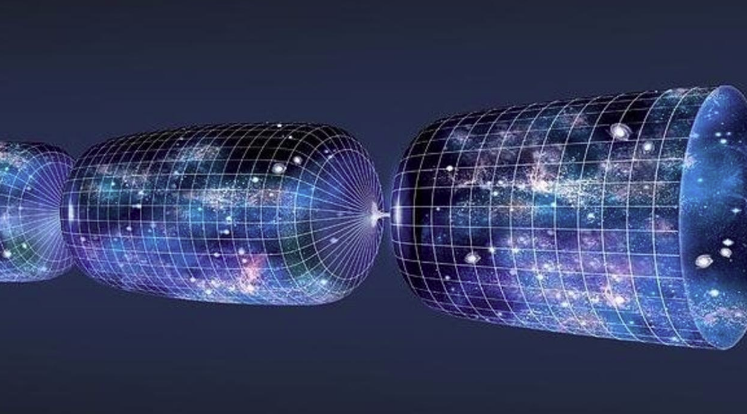
 We are not living in the main universe. There were different universes, in different ages, before our own, a gathering of physicists has said. Like our own, these universes were loaded with black holes. Also, we can identify hints of those long-dead dark openings in the infinite microwave foundation (CMB) — the radioactive leftover of our universe's rough birth. 


In any event, that is the to some degree unconventional perspective on the gathering of scholars, including the noticeable Oxford University numerical physicist Roger Penrose (additionally a significant Stephen Hawking associate). Penrose and his acolytes contend for a changed rendition of the Big Bang. 


In Penrose and comparatively slanted physicists' set of experiences of existence (which they call conformal cyclic cosmology, or CCC), universes bubble up, extend and bite the dust in grouping, with black holes from each leaving follows in the universes that follow. Also, in another paper delivered Aug. 6 in the preprint diary arXiv—clear proof for Hawking focuses in the CMB sky—Penrose, alongside State University of New York Maritime College mathematician Daniel An and University of Warsaw hypothetical physicist Krzysztof Meissner, contended that those follows are obvious in existing information from the CMB. 


Daniel A clarified how these follows shape and make due starting with one age then onto the next. 


"In the event that the universe continues endlessly and the black holes eat up everything, at one point, we're simply going to have dark openings," he disclosed to Live Science. As indicated by Hawking's most celebrated hypothesis, black holes gradually lose a portion of their mass and energy after some time through radiation of massless particles called gravitons and photons. On the off chance that this Hawking radiation exists, "at that point what will happen is that these black holes will continuously, steadily shrivel." 


At one point, those black holes would break down completely, A stated, leaving the universe a massless soup of photons and gravitons. 


"The thing about this timeframe is that massless gravitons and photons don't generally encounter time or space," he said. 


Gravitons and photons, massless light speed voyagers, don't encounter reality a similar way we — and the wide range of various gigantic, more slow moving articles known to mankind—do. Einstein's hypothesis of relativity directs that objects with mass appear to travel through time more slow as they approach the speed of light, and distances become slanted from their point of view. Massless articles like photons and gravitons travel at the speed of light, so they don't encounter time or distance by any means. 


In this way, a universe loaded up with just gravitons or photons won't have any feeling of what is time or what is space," A said. 


By then, a few physicists (counting Penrose) contend, the immense, vacant, post-black holes universe begins to take after the super compacted universe right now of the enormous detonation, where there's no time or distance between anything. 


"And afterward it starts from the very beginning once more," A said. 


Things being what they are, if the new universe contains none of the black holes from the past universe, how could those black holes leave follows in the CMB? 


Penrose said that the follows aren't of the black holes themselves, but instead of the billions of years those articles burned through investing energy out into their own universe by means of Hawking radiation. 


"It's not the black holes peculiarity," or it's genuine, actual body, he revealed to Live Science, "yet the… whole Hawking radiation of the opening since its commencement." 


This is what that implies: All the time a black holes spent dissolving itself by means of Hawking radiation leaves an imprint. What's more, that mark, made in the foundation radiation frequencies of room, can endure the demise of a universe. On the off chance that specialists could detect that mark, at that point the researchers would have motivation to accept that CCC vision of the universe is correct, or if nothing else not unquestionably off-base . 


To recognize that weak detriment for the all around weak, jumbled radiation of the CMB, A stated, he ran a sort of measurable competition among patches of sky. 


A took roundabout locales in the third of the sky where worlds and starlight don't overpower the CMB. Next, he featured territories where the dissemination of the microwave frequencies coordinate what might be normal if Hawking focuses exist. He had those circles "contend" with each other, he stated, to figure out which region most almost coordinated the normal ranges of Hawking focuses. 


At that point, he contrasted that information and phony CMB information he arbitrarily created. This stunt was intended to preclude the likelihood that those provisional "Selling focuses" might have shaped if the CMB were totally arbitrary. On the off chance that the arbitrarily created CMB information couldn't emulate those Hawking focuses, that would unequivocally propose that the recently recognized Hawking focuses were in fact from black holes of ages past. 


This isn't the first occasion when that Penrose has put out a paper seeming to distinguish Hawking focuses from a past universe. In 2010, he distributed a paper with the physicist Vahe Gurzadyan that made a comparative case. That distribution started analysis from different physicists, neglecting to persuade mainstream researchers writ huge. Two subsequent papers (here and here) contended that the proof of Hawking focuses Penrose and Gurzadyan distinguished was indeed the aftereffect of arbitrary commotion in their information. 


All things considered, Penrose presses forward. (The physicist has additionally broadly contended, without persuading numerous neuroscientists, that human awareness is the aftereffect of quantum registering.) 


Found out if the black holes from our universe may sometime leave follows known to man of the following age, Penrose reacted, "Truly, in fact!"